Fall Outdoor Living: Extend Your Patio Season on the Texas Coast
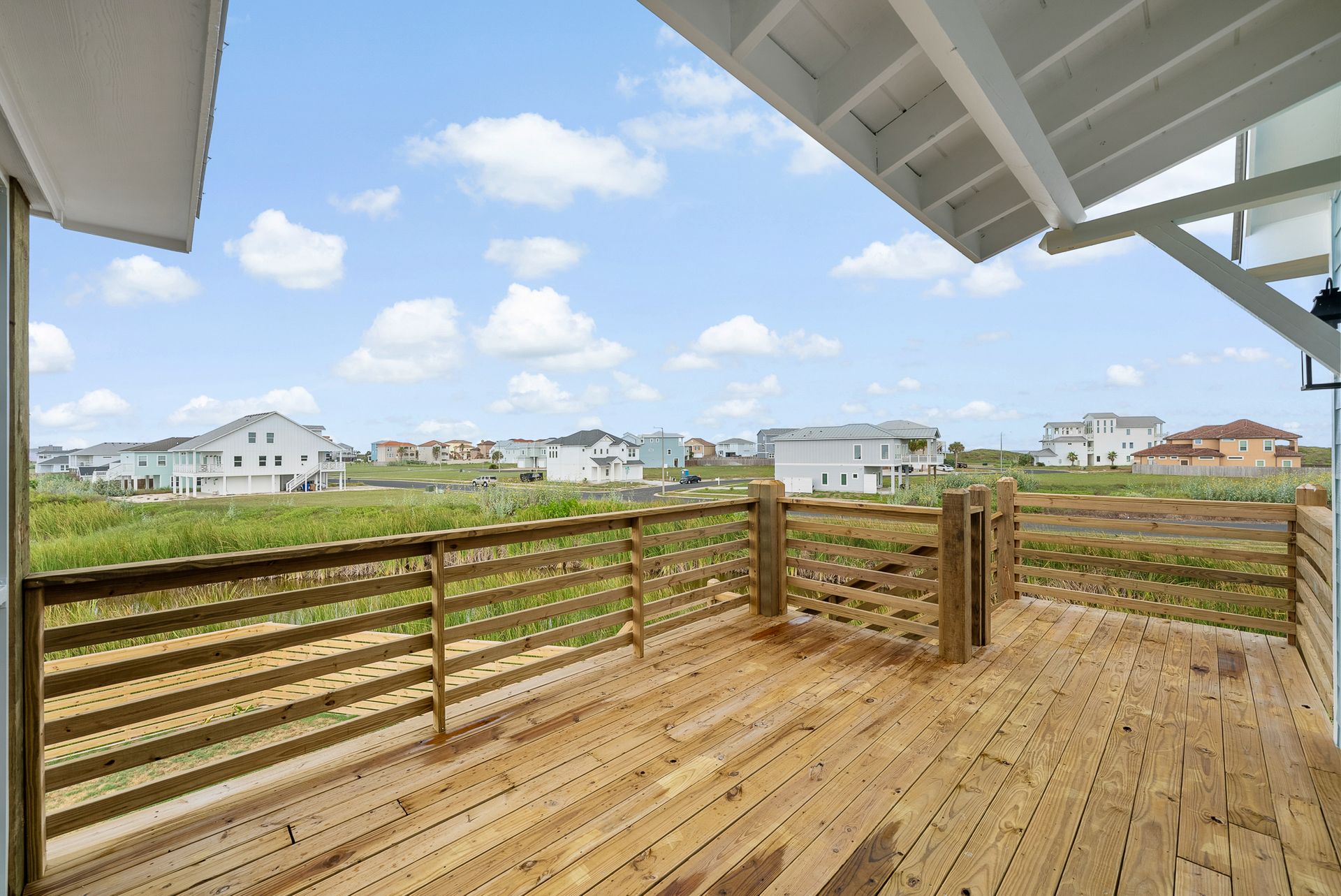
Autumn along the Texas Gulf Coast doesn’t mean retreating indoors. Cooler evenings, lighter breezes, and low humidity make October one of the most enjoyable times to be outside. Whether you already have a patio or are planning one in your new custom home, extending the use of your outdoor space through fall adds living area, comfort, and value.
At South Texas Home Builders, we design patios, decks, and outdoor kitchens that perform year-round—even in the demanding salt-air conditions of coastal living. Here’s how to make your outdoor space an all-season extension of your home.
1. Re-Think Shade and Shelter
By October, the intensity of the summer sun eases, but you’ll still want protection from glare, wind, and the occasional coastal drizzle.
- Layered shade: A pergola with a slatted roof, retractable canopy, or tensioned sail allows filtered light during the day and open-sky views at night.
- Wind protection: Consider louvered walls, glass panels, or strategically placed vegetation to block gusts without closing off airflow.
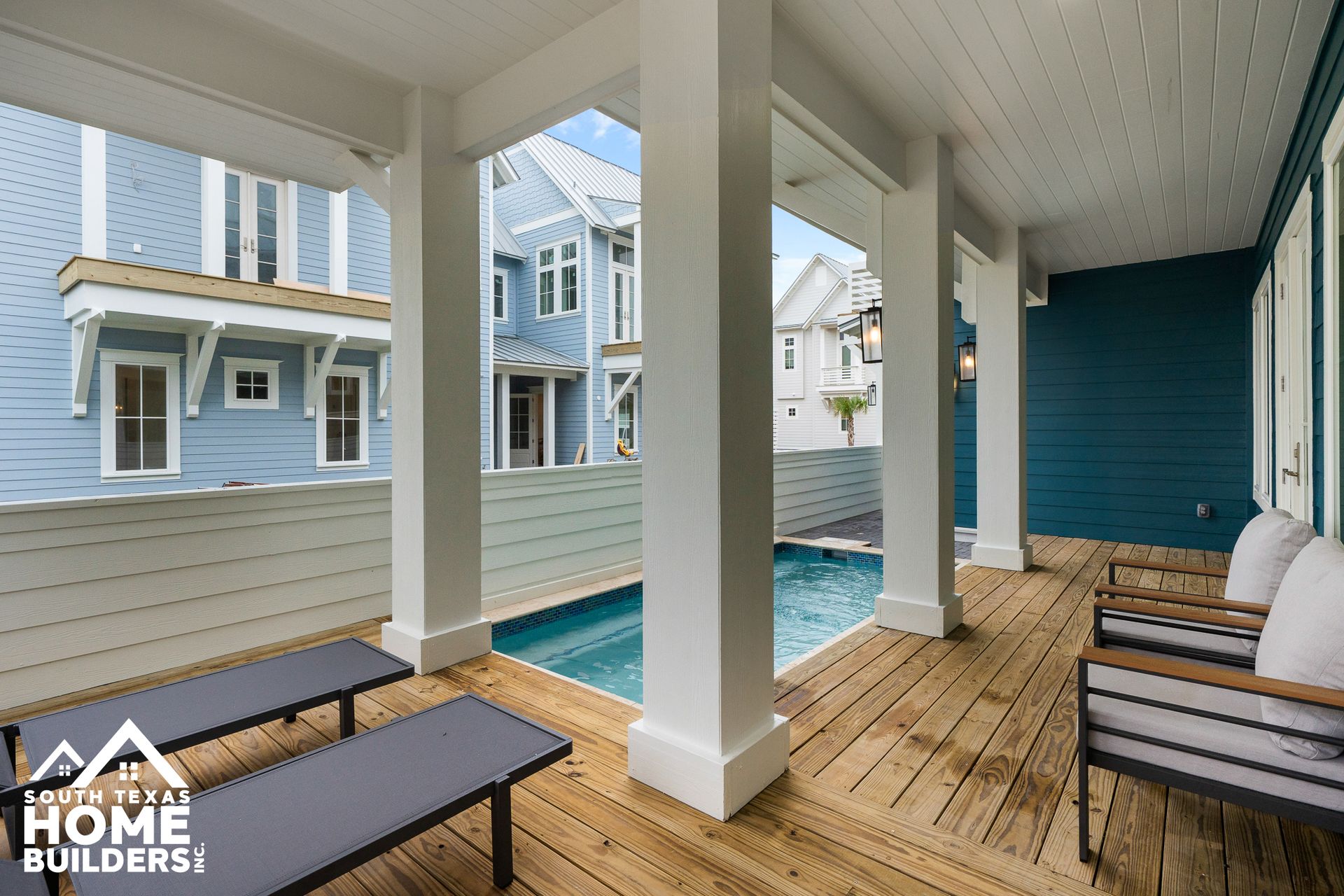
- Permanent cover: If you’re designing a new build, integrate the patio cover into the home’s roofline. It not only looks intentional but performs better in wind-load zones.
Builder insight: Every cover should be tied into the home’s structure—not surface-mounted. Stainless hardware, hurricane-rated anchors, and proper drainage keep it secure and low-maintenance.
2. Choose Coastal-Grade Materials
Coastal air accelerates wear on everything outdoors. The right materials make the difference between yearly replacement and decades of enjoyment.
- Decking: Composite, sealed concrete, or dense tropical hardwoods stand up best. Keep expansion gaps tight and surfaces sealed.
- Fasteners: Use 316 stainless or hot-dip galvanized screws, brackets, and post bases. Ordinary steel will corrode within a season.
- Furniture: Marine-grade fabrics, powder-coated aluminum, or resin-based materials resist mildew and fading.
- Countertops and cabinets: If your patio includes a kitchen or bar, select sealed stone or stainless surfaces and weather-proof cabinetry.
Durability note: A quick rinse with fresh water once or twice a month removes salt buildup that can shorten material life by half.
3. Light, Heat, and Comfort
Lighting and warmth turn a patio into an outdoor living room.
- Lighting layers: Combine path lights for safety, warm LED string or soffit lighting for ambience, and focused task lighting over cook areas.
- Fire features: Gas fire pits, wall-mounted heaters, or built-in fireplaces extend the season well into December. Choose equipment with corrosion-resistant housings and approved clearances.
- Soft elements: Outdoor rugs, cushions, and throws in UV-stable fabrics keep things inviting. Neutral palettes complement the natural coastal setting and transition easily to holiday décor.
Builder insight: Run conduit and gas lines during construction—even if you don’t install heaters right away. Future-proofing the infrastructure avoids expensive retrofits later.
4. Maintain for Longevity
A short seasonal routine keeps patios in top form:
- Rinse surfaces and furniture monthly to remove salt film.
- Check all fasteners and tighten or replace any showing rust streaks.
- Clean gutters or downspouts that drain onto patios to prevent staining.
- Re-seal decking and grout lines every 2–3 years.
- Test lighting and gas systems before holiday gatherings.
Routine care not only preserves the look of your outdoor space—it also prevents minor corrosion or moisture intrusion from becoming costly repairs.
5. Designing for Everyday Living
The best patios feel like a natural extension of the home. When planning your build:
- Align the patio floor just a step down from the interior for seamless flow.
- Use similar flooring tones inside and out to visually connect spaces.
- Position outdoor kitchens near interior prep areas but downwind of seating zones.
- Include ceiling fans, outlets, and low-voltage wiring during framing.
A well-integrated patio becomes part of daily life—morning coffee spot, weekend cookout hub, and evening retreat.
Built for the Coast
When we design outdoor living spaces for South Texas homes, we treat them with the same structural care as the rest of the house—anchored, sealed, and finished for longevity. The result is a space that’s comfortable now and still beautiful years from now, no matter what the Gulf throws at it.
If your current patio feels seasonal or underused, this is the ideal time to rethink it. The right materials and planning can make “patio weather” a twelve-month reality along the coast.
NEWS